Unlocking Geometry: Parallel Lines, Angles & Spatial Reasoning
From the architecture of Singapore's skyline to the math exam paper—why geometry matters and how to help your child master the "turn" of the lines.
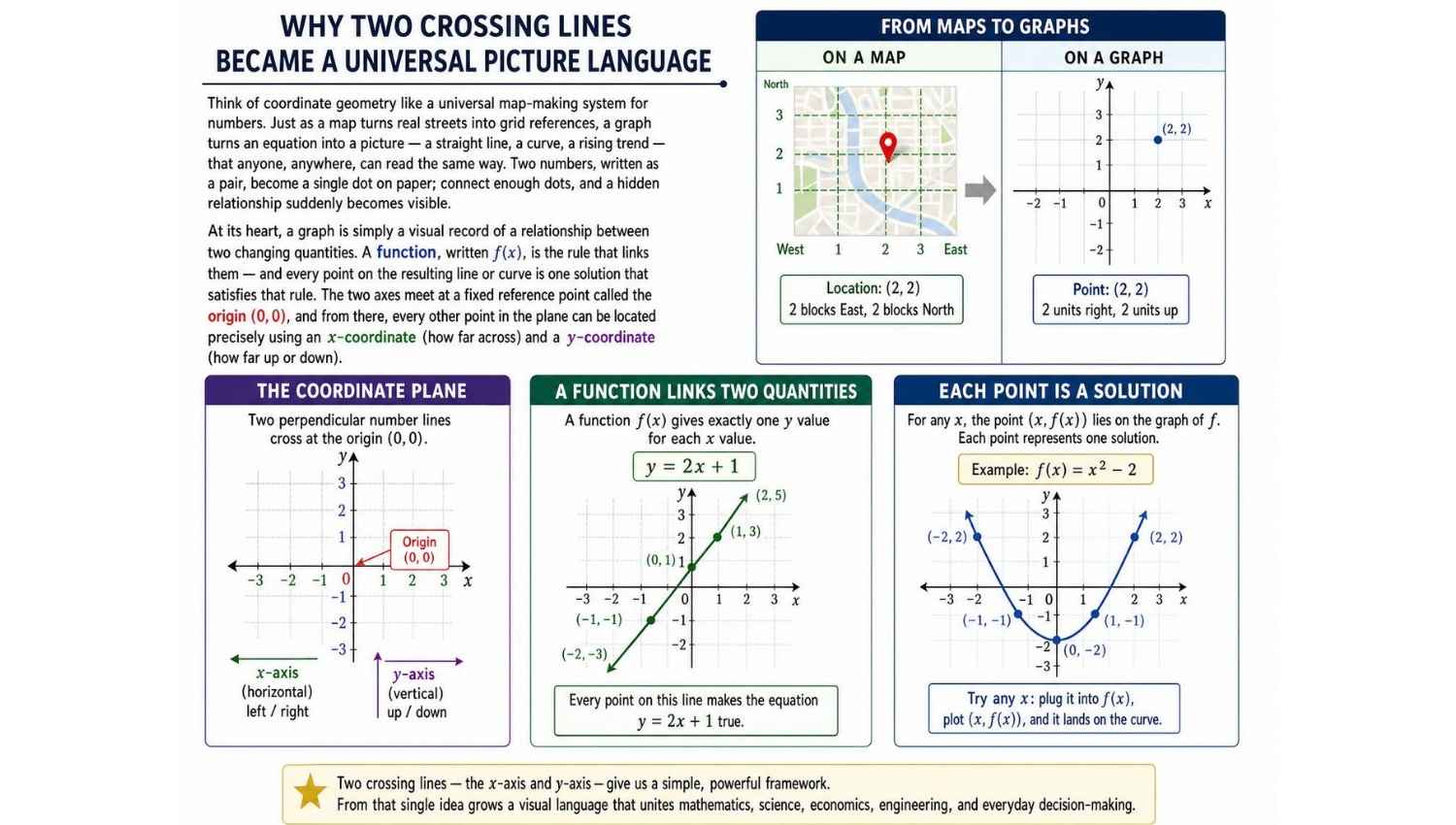
Geometry is the branch of mathematics concerned with the properties and relations of points, lines, surfaces, and solids in space. From the ancient Greeks to modern scientists, geometry has long served as a cornerstone of mathematical thinking and real-world problem solving.
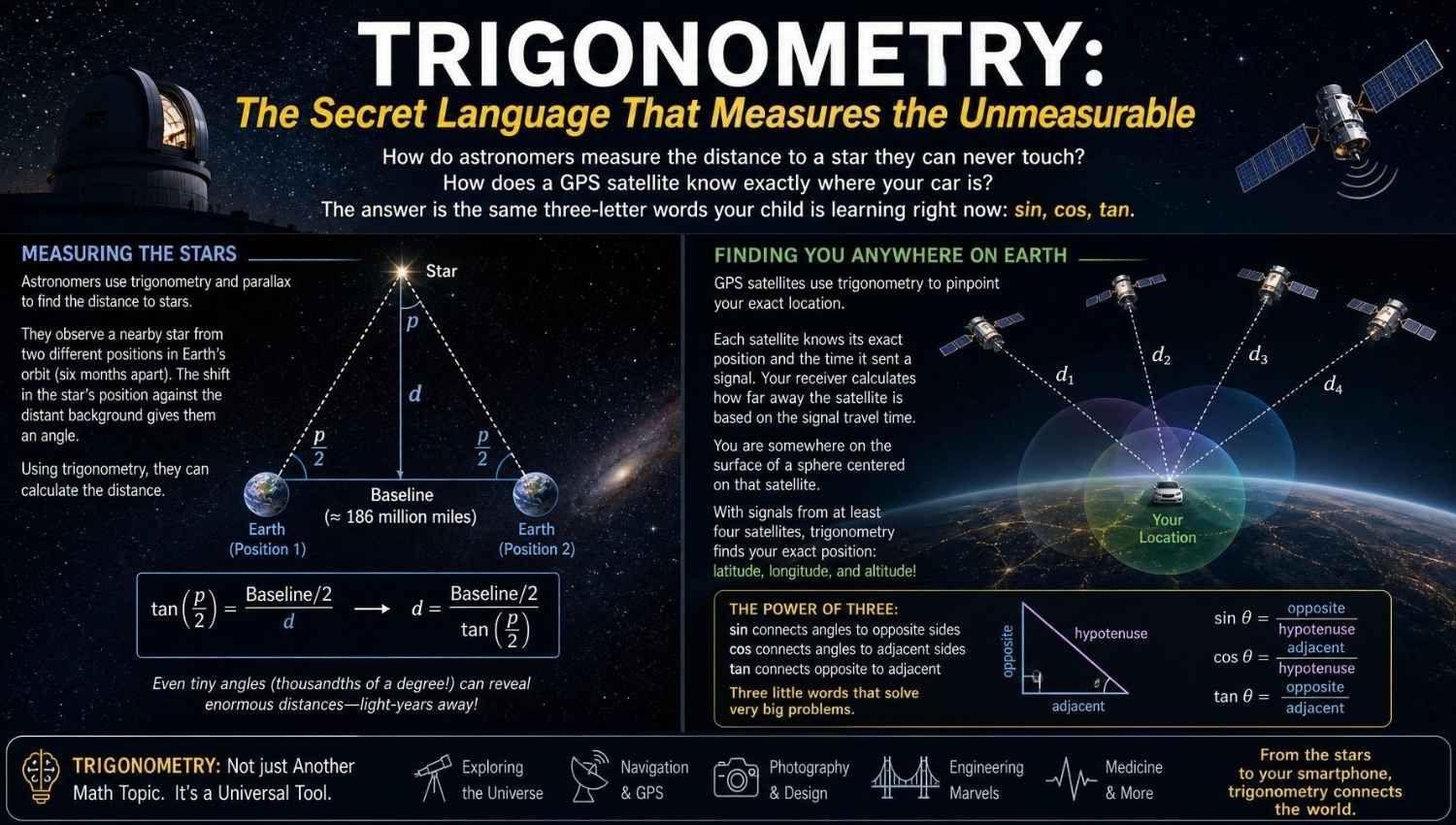
Today, geometry is ubiquitous, underpinning a vast range of disciplines:
🌍 Climate Science
Modelling Earth's curved surfaces and atmospheric layers.
🔬 Microbiology
Analysing the geometric structure of cells and viruses.
🏗️ Architecture
Designing structurally sound buildings and bridges.
💻 Computer Graphics
Rendering 3D environments in games and simulations.
An angle forms at a vertex where two straight lines meet—it measures the turn from one line to the other. One full turn equals 360°.
1 Acute Angle
The "Sharp" Angle
Any angle measuring between 0° and 90°. Think of a slightly open pair of scissors or the tip of a pizza slice.
2 Right Angle
The "Perfect Corner"
Exactly 90°. These are perpendicular lines forming an 'L' shape. They are the foundation of construction and grids.
3 Obtuse & Reflex
The "Wide" Angles
Obtuse: Between 90° and 180°.
Reflex: The "outside" angle, between 180° and 360°.
Reflex: 180° - 360°
Geometry isn't just about lines; it's about space. Here are the two most critical formulas your child will encounter in Upper Primary.
Area of a Triangle
Key Tip: The height (h) must always be perpendicular (90°) to the base.
Properties of a Circle
Circumference = 2 × π × r
Key Tip: Remember that Diameter (d) = 2 × Radius (r).
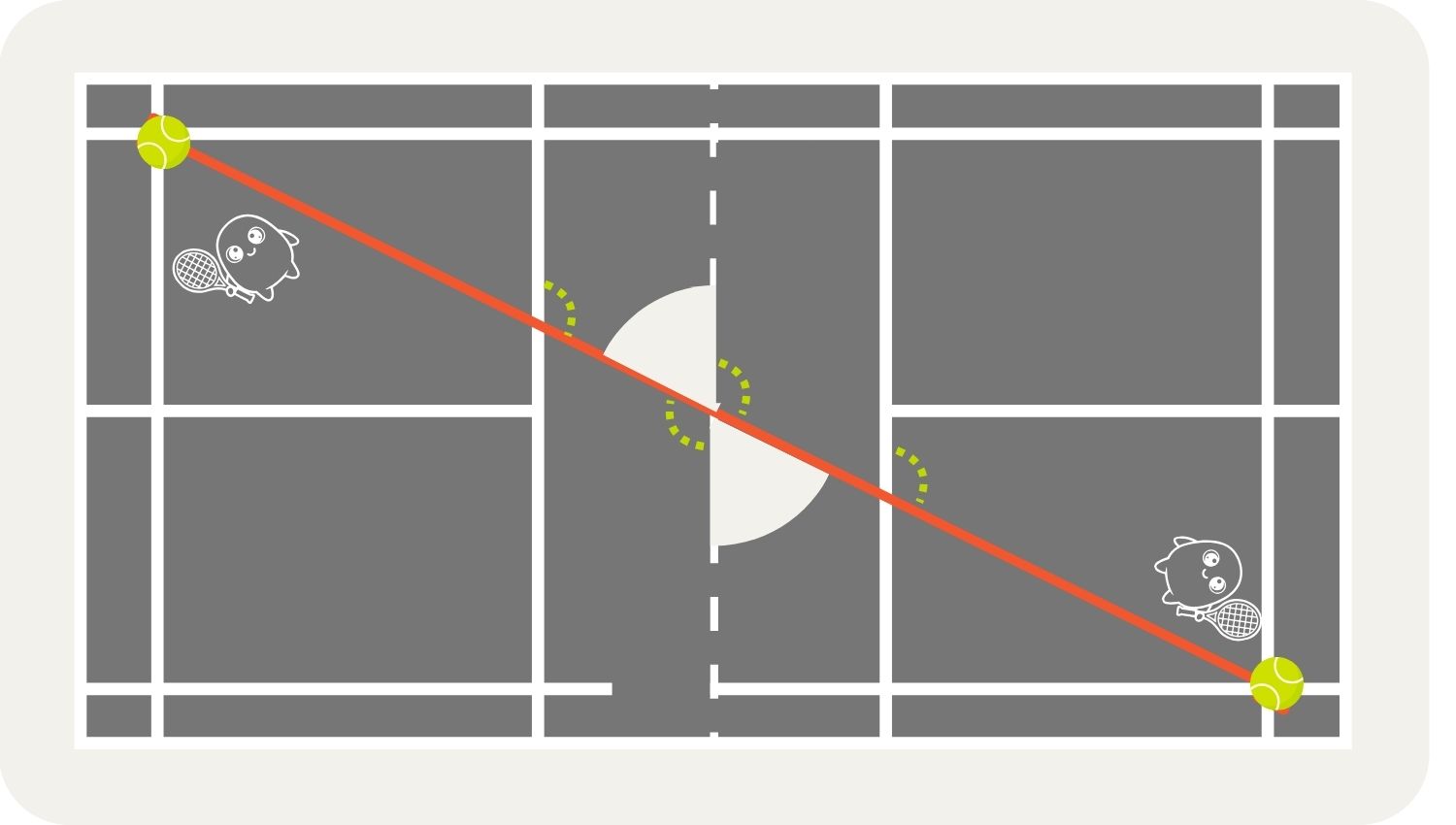
Parallel lines are straight lines that remain the same distance apart, never meeting. When a third line (the transversal) crosses them, three key angle relationships emerge.
Z Alternate Angles
Found on opposite sides of the transversal, between the parallel lines.
F Corresponding Angles
Found on the same side, in the same position (e.g., top right) at each intersection.
C Co-interior Angles
Found on the same side, between the parallel lines. Also called "interior angles."
Geometry requires visual discrimination skills that take time to develop. Here are the most common stumbling blocks.
Challenge 1: Confusing Angle Types
The Issue: Many students mix up alternate, corresponding, and co-interior angles, especially when diagrams are rotated, tilted, or part of a larger shape.
How to Help:
- Trace the Letters: Use a pencil and ruler to physically trace the Z-shape (alternate), F-shape (corresponding), and C-shape (co-interior) directly on printed diagrams.
- Memory Anchors: Remind them that letter shapes are powerful visual cues. If they can find the letter, they can find the rule.
Challenge 2: Forgetting Co-Interior Angles Add to 180°
The Issue: Students often assume all angle pairs between parallel lines are equal. They mistakenly set co-interior angles as equal instead of supplementary.
How to Help:
- The Rhyme: Remind your child: "Same side? They SHARE 180°!"
- Visual Check: Ask them to look at the angles—one is usually acute and one obtuse. If they look different, they cannot be equal!
Challenge 3: Not Identifying the Transversal
The Issue: When diagrams grow complex with multiple lines, children struggle to isolate which lines are parallel and which is the transversal.
How to Help:
- Color Coding: Encourage your child to highlight parallel lines in one colour (e.g., blue) and the transversal in another (e.g., red) before attempting the question.
Challenge 4: Skipping Workings
The Issue: Students jump to answers without stating the angle property used, losing precious marks in exams for "reasoning."
How to Help:
- The Statement Drill: Practise writing full statements. Instead of just writing "65", write:
"∠ABC = 65° (alternate angles, AB // CD)"
Follow this step-by-step guide to build rock-solid geometry skills.
Build the Foundation First
Before tackling transversals, ensure your child is confident with basic properties: Angles on a straight line = 180°, Angles at a point = 360°, and Vertically opposite angles are equal.
Master the 3 Letter Shapes
Draw the shapes repeatedly until they become instinctive. Z for Alternate (Equal), F for Corresponding (Equal), and C for Co-interior (Sum to 180°).
Practise in Stages
Beginner: Identify angle types from simple diagrams.
Intermediate: Calculate missing angles with one transversal.
Advanced: Solve multi-step problems with complex figures.
Adopt the 3-Step Answer Method
Every answer should follow this structure: 1. State the value. 2. Name the property. 3. Identify the parallel lines.
Spot Angles in Real Life
Connect geometry to everyday surroundings. Look at window grilles, road intersections, and football field markings. This makes the abstract concepts tangible.
Singapore follows the MOE Mathematics Framework, built around the central goal of mathematical problem solving.
Curriculum Overview by Level
Numbers to 1,000, Shapes, Patterns, Length, Mass, Money.
Numbers to 100,000, Fractions, Area & Perimeter, Angles introduced (P4).
Area of Triangles, Volume, Rate, Angles in Triangles & Quadrilaterals, Algebra.
The 5 Key Pillars of MOE Math
The framework is designed in a bid to foster holistic mathematical mastery:
- Concepts: Understanding why math works, not just how.
- Skills: Proficiency and accuracy in calculation.
- Processes: Logical reasoning, heuristics, and modelling.
- Metacognition: Thinking about your own thinking (monitoring self-regulation).
- Attitudes: Building confidence and a love for math.
Singapore consistently ranks among the top in the world for Mathematics in TIMSS and PISA assessments—a testament to this rigorous yet nurturing curriculum!

Little and often beats long study sessions. Just 5 minutes daily of angle identification using real-life objects (scissors, roof slopes, window frames) builds lasting confidence.
Remember, every expert was once a beginner—one angle at a time!